Clinical Taping Therapy

- Description
- Curriculum
- Reviews
Course Overview
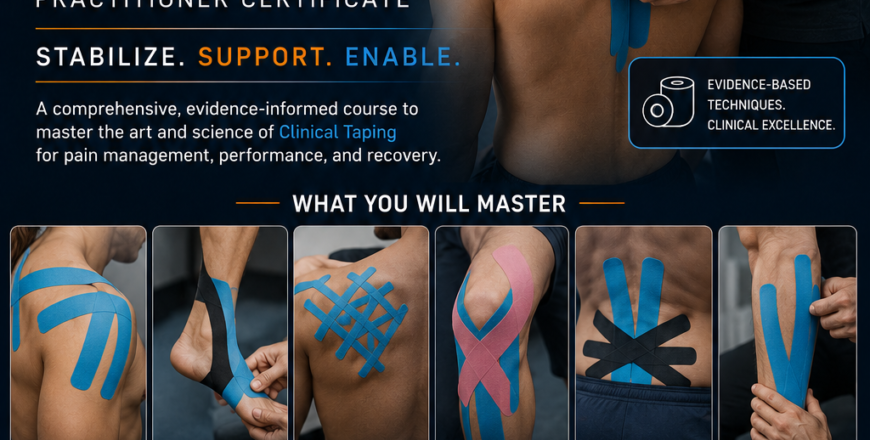
Clinical taping works because of real, measurable physiology — not just tradition. This course builds your understanding from the mechanism up: how taping affects skin, fascia and the nervous system, and how that translates into pain relief, joint support and better movement for your patients.
You’ll leave with a clinical reasoning framework for choosing the right tape, tension and technique — reinforced by two live, hands-on practice sessions applying what you’ve learned to real body regions.
Meet Your Tutor — Dr. Islam Ahmad
Consultant Physiotherapist and founder of SmartPhysio UK, with a career spanning hospital leadership and armed forces clinical practice.
- Head of the Physiotherapy Department, Al Zawya General Hospital, Cairo
- Assistant Director, Manshiyet El-Bakry Hospital, Heliopolis, Cairo
- Former Physiotherapy Specialist, Egyptian Armed Forces Hospitals
Course Objectives
By the end of this course, you’ll be able to:
- Explain the neurophysiological mechanism behind kinesiology taping, from skin mechanoreceptors to pain modulation
- Match tape type and tension level to the clinical goal — from gentle lymphatic support to full joint restriction
- Apply region-specific taping techniques across the whole body, from neck to foot
- Screen every patient for contraindications and precautions before taping
Core Techniques You’ll Master
Elastic Kinesiology Taping
Understand how lifting the skin creates space for lymphatic and blood flow, easing pressure on pain receptors and stimulating mechanoreceptors that help modulate pain signals to the brain.
Movement-Linked Joint Taping
Apply directional taping that complements a pain-free accessory joint glide, letting patients move actively and pain-free during rehabilitation.
Patellar Realignment Taping
Medialise the patella within the trochlear groove to reduce pain and support quadriceps activity during daily activity and exercise therapy.
Rigid vs Elastic Strapping
Choose confidently between rigid sports tape for firm joint restriction and elastic tape when a more dynamic, supportive stretch is what the presentation calls for.
Contraindication & Precaution Screening
Build a reliable pre-taping checklist covering skin allergies, open wounds, malignancy, DVT, diabetes, congestive heart failure and pregnancy — so every application starts safely.
Why This Course
- Mechanism-First Learning: understand why taping works, not just how to apply it
- Whole-Body Skillset: techniques that carry across neck, shoulder, back, hip, knee and foot
- Two Hands-On Sessions: guided practice applying every technique to real body regions
- Safety Built In: a contraindication checklist you’ll use with every patient
Prerequisites
- Basic understanding of musculoskeletal anatomy
- Suited to physiotherapists, sports therapists and rehabilitation professionals
What’s Included
- Full video-based lecture content
- Practical, region-by-region demonstrations
- Two guided hands-on practice sessions
Online · Self-Paced