Hot
Orthopedic Manual Therapy Certificate OMTC
Main concepts of various manual therapy schools.
Clinical full manual assessment and evaluation of the patients.
How to select the most appropriate ...
Show more

- Description
- Curriculum
- Reviews
Course Overview
The Orthopedic Manual Therapy Certificate (OMTC) has already trained 81 physiotherapists through 18 hours of clinical content, covering assessment, treatment reasoning, and hands-on technique across the full body — upper quadrant and lower quadrant.
Built around a clear clinical reasoning framework, with a strong emphasis on practical, hands-on application.
Course Content & Learning Objectives
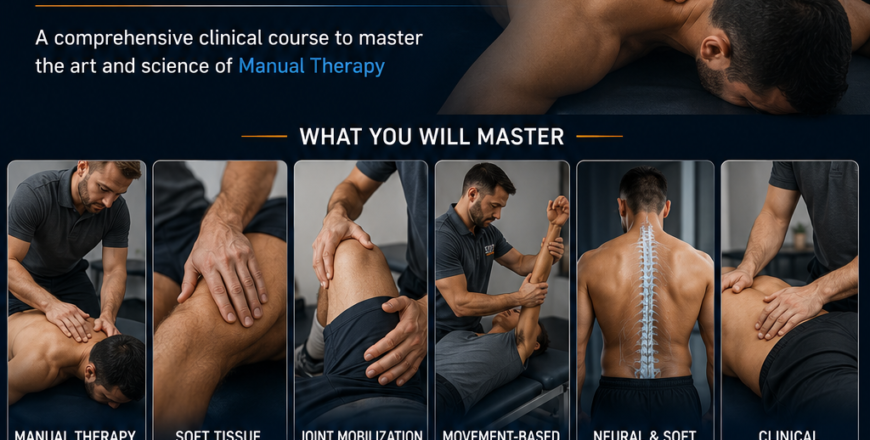
Master evidence-based manual assessment and treatment reasoning, understand the major manual therapy frameworks and when to apply each, and build hands-on competence in mobilization, manipulation, and soft-tissue technique across every major joint.
Foundations & Core Techniques
Clinical Reasoning & Assessment
- The therapeutic paradigms behind manual therapy
- Progressive tissue-tension testing to localize the lesion
- Capsular patterns and end-feel assessment
Soft Tissue Techniques
- Deep friction massage: technique, dosage, and progression
- Myofascial release, active release, trigger point work
- Multiple massage modalities
Mobilization & Manipulation
- A graded mobilization scale
- Manual traction: indications and contraindications
- Instrument-assisted soft tissue mobilization
Upper Quadrant
Cervical Spine
- Manual traction indications, contraindications, and dosing parameters
- Deep neck flexor activation and motor control progressions
- Mobilization approach for neck pain, stiffness, and cervicogenic headache
Thoracic Spine
- Thoracic mobilization for pain, stiffness, and movement limitation
- The evidence for thoracic technique in relieving neck pain and supporting respiratory function
Shoulder
- Glenohumeral, scapulothoracic, sternoclavicular, and acromioclavicular mobilization
- Manual approach for subacromial pain, adhesive capsulitis, and rotator cuff tendinopathy
- Post-operative and post-traumatic shoulder considerations
Elbow, Wrist & Hand
- Humeroulnar and humeroradial mobilization and distraction
- Radiocarpal and mid-carpal glide techniques
- Safety notes: unstable joints, healing fractures, and acute inflammation
Lower Quadrant
Lumbar Spine
- Recognizing red-flag contraindications before any lumbar technique
- Mobilization strategy for mechanical low back pain
Hip
- Anterior, posterior, and lateral glide techniques
- Rotational oscillations for hip mobility restriction
Knee
- Tibiofemoral distraction, anterior/posterior, and rotational glides
- Patellofemoral mobilization technique
Ankle & Foot
- Tibiofibular and talocrural mobilization and distraction
- Intertarsal and tarsometatarsal glide technique
Key Clinical Questions
The OMTC addresses the questions that come up in every real clinical session. Here are a few examples of what you’ll be able to answer:
- How do you determine whether a patient’s pain originates from a joint, a muscle, or a nerve?
- What safety checks must be cleared before applying a high-velocity manipulation?
- How do you choose the right mobilization grade for the patient in front of you?
- When is traction indicated, and when is it contraindicated?
Prerequisites
- Physical therapist or medical professional
- Basic musculoskeletal anatomy knowledge
What’s Included
- 18 hours of content, 15 hours on video
- Certificate of completion
- Lifetime access to all modules
Online · Self-Paced

Please, login to leave a review


Course details
Duration
18 hours
Lectures
1
Video
15 hours
Level
Advanced
Certified
Lifetime
Popular courses