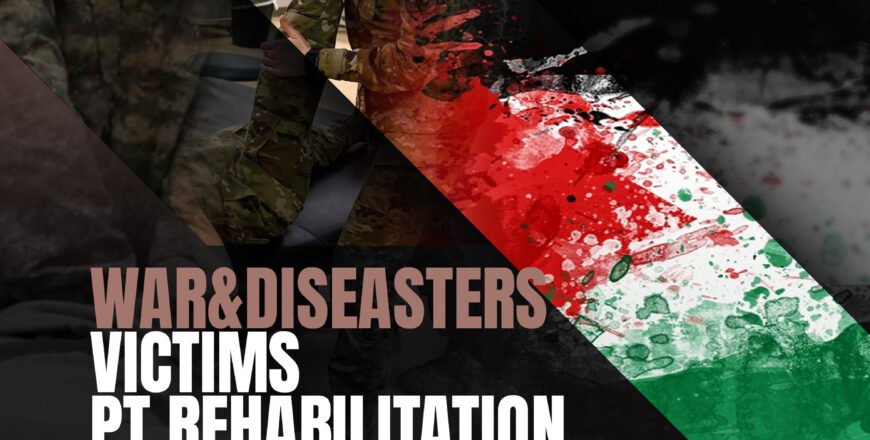
برنامج محترف تأهيل إصابات الحروب والكوارث

- Description
- Curriculum
- Reviews
الدورة السادسة لبرنامج محترف تأهيل إصابات الحروب والكوارث
هذه الدورة حصرية ولم تقدم من قبل بأي أكاديمية أو جامعة عربية أو أجنبية وأي نسخ أو مطابقة أو استخدام لنفس الاسم أو المادة لا يعد تشابهاً بل سرقة من لصوص يبدون محترمين فحسب.
تأتي هذه الدورة المتقدمة لتأهيل الكوادر الطبية، خصوصًا المعالجين الفيزيائيين، على التعامل المهني مع الإصابات الناتجة عن الحروب والكوارث الطبيعية أو الإنسانية، من خلال الجمع بين الجانب العلمي النظري والتدريب العملي الميداني.
تهدف الدورة إلى إعداد المعالجين للعمل في البيئات الميدانية عالية الخطورة، وتزويدهم بالمهارات الضرورية للتعامل مع مختلف أنواع الإصابات المعقدة التي تتطلب استجابة سريعة وتدخلاً متخصصًا، بما في ذلك تقديم برامج التأهيل البدني والنفسي للمصابين بعد المرحلة الحرجة.
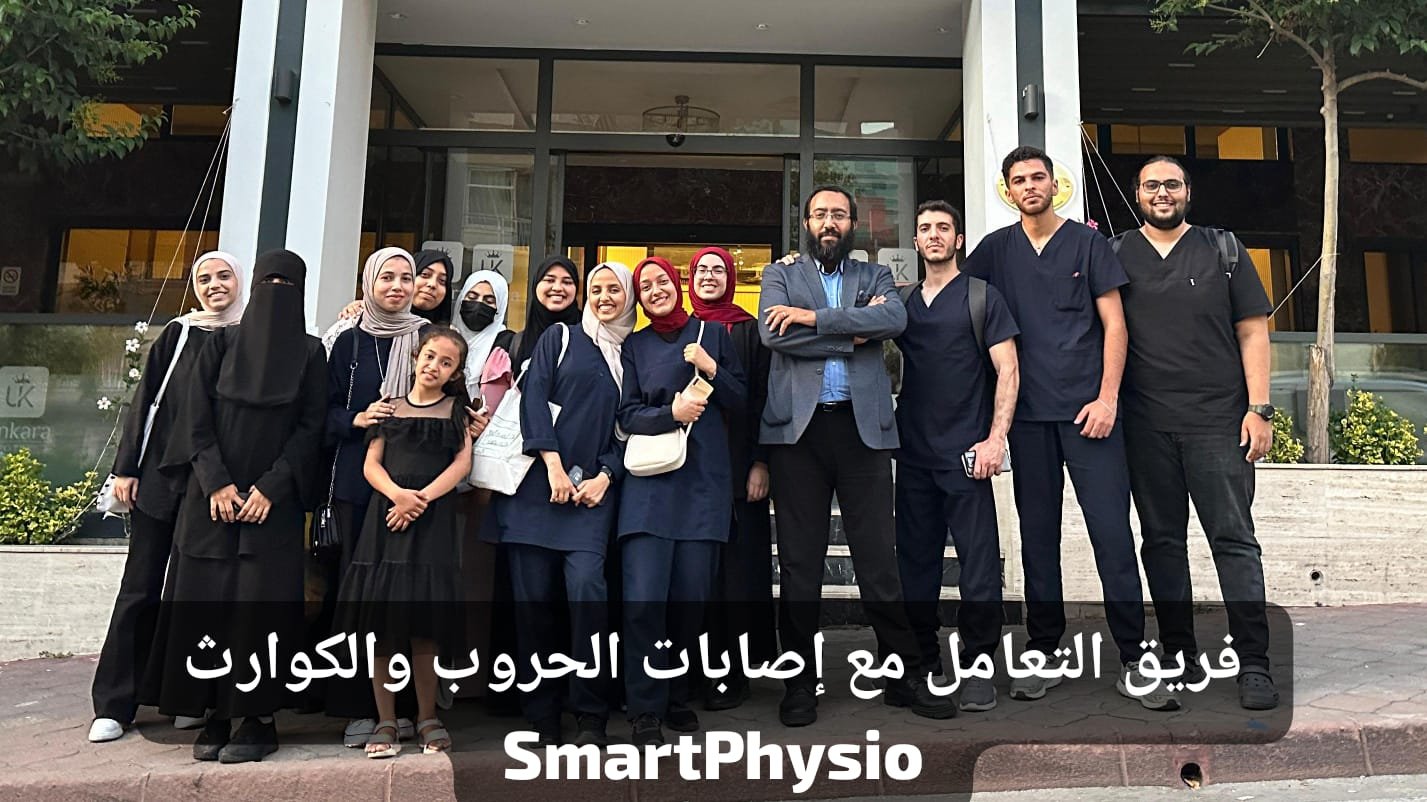
✅ محاور الدورة:
-
Crush injuries: التقييم والتأهيل الوظيفي بعد الإصابات الساحقة.
-
Post-Surgical conditions: التعامل مع الحالات ما بعد العمليات الجراحية الطارئة.
-
Combat-related injuries: بروتوكولات التعامل مع الإصابات القتالية الميدانية.
-
Spinal cord injuries: استراتيجيات إعادة التأهيل للحالات الحادة والمزمنة.
-
Amputation: رعاية وتأهيل مبتوري الأطراف باستخدام أحدث الأساليب.
-
Burn injuries: برامج العلاج الطبيعي والتأهيل بعد الحروق.
-
Combat-related respiratory disorders: التعامل مع الاضطرابات التنفسية الناتجة عن الحروب والغازات.
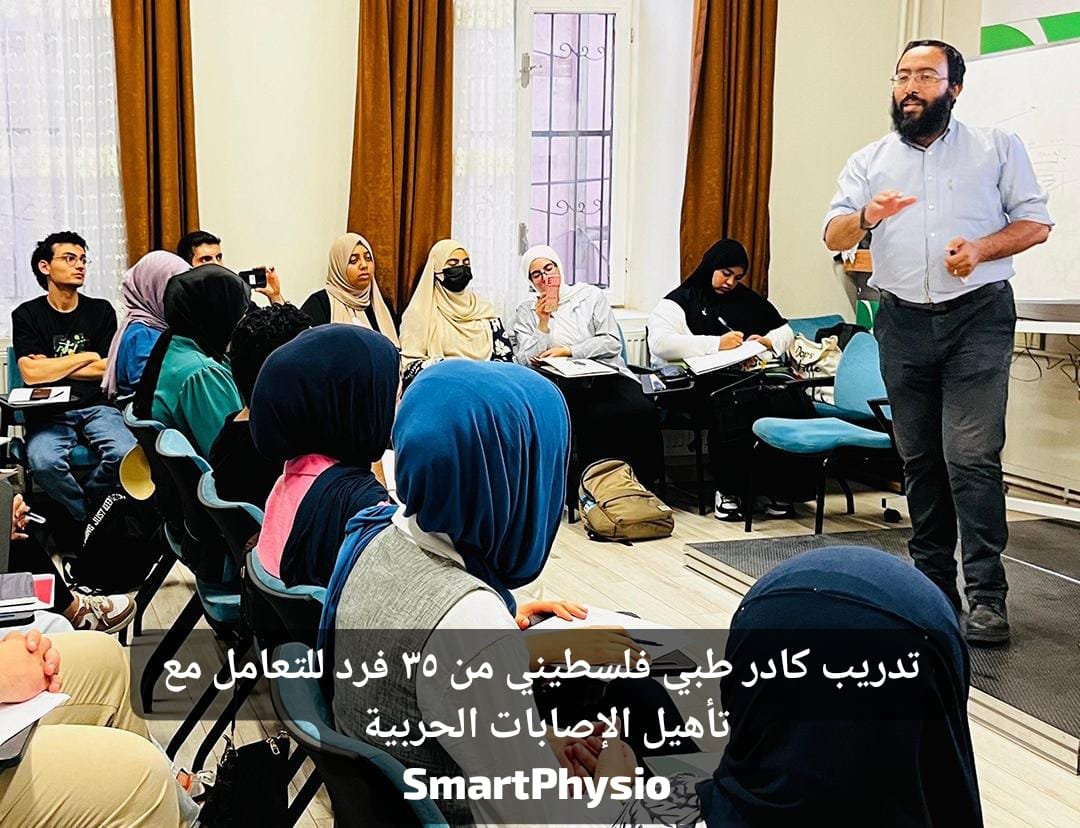
🎯 مميزات الدورة:
-
تدريب متخصص يجمع بين التعليم الأكاديمي والتطبيق العملي الميداني.
-
تقديم خبرة عملية بعد انتهاء الدورة عبر برامج إشرافية ودعم مهني مستمر.
-
إعداد كوادر قادرة على العمل في مراكز التأهيل، المستشفيات الميدانية، ومنظمات الإغاثة الإنسانية.
-
إشراف خبراء ذوي خبرة طويلة في مجال العلاج الطبيعي وإدارة الإصابات المعقدة.
الفئة المستهدفة:
-
المعالجون الفيزيائيون وطلبة العلاج الطبيعي.
-
الكوادر الطبية العاملة في مجالات الطوارئ والإغاثة.
-
المهتمون بالعمل الإنساني في بيئات النزاع والكوارث.
-
1
 Index
Index -
2
Introduction
-
3
Triage and Field Documentation
-
4
Amputee Rehabilitation I
-
5
Amputee Rehabilitation II
-
6
Amputee Rehabilitation III
-
7
Burn Physiotherapy
-
8
Crush Injury, Compartment Syndrome & Rhabdomyolysis
-
9
Case Study: Forearm Crush Injury
-
10
Peripheral Nerve Injuries Classification
-
11
Peripheral Nerve Injuries: Rehabilitation Management
-
12
Spinal Cord Injury: 100 Practical Rehabilitation Notes
-
13
Acquired Brain Injury & Traumatic Orthopedic Injuries in Disasters
-
14
Respiratory Rehabilitation
-
15
Blast Injury Mechanism and Classification
-
16
Blast mTBI, Vestibular Dysfunction & Dizziness
ملحوظة: إضافة ملحوظاتنا العملية على أسلوب تأهيل المصابين من ضحايا القصف بغزة .. لم تتم إضافتها بعد
-
17
Blast-Related Hearing Loss & Tinnitus
-
18
Multiple, Triple & Quadruple Amputee Rehabilitation
ملحوظة سأعود لها لاحقاً بإذن الله: يجب أن أضيف صورة لمصاب مبتور الفخذين يتدرب على توازن الوقوف داخل المتوازي في المرحلة الأولى بمساعدة أخصائي علاج طبيعي
-
19
Gait Training with a Prosthesis
ملحوظة سأضيفها لهذا الملف لاحقاً بإذن الله: مقارنة بين ثلاث انحرافات شائعة في المشي: الانحناء الجانبي للجذع، القفز على الطرف السليم "Vaulting"، والتحريك الدائري للطرف الصناعي "Circumduction"
-
20
Nutrition & Wound Healing in Austere Environments
ملحوظة سأضيفها لاحقاً بإذن الله تعالى: صورة توضح الطريقة الصحيحة لقياس محيط منتصف العضد "MUAC" باستخدام شريط قياس
-
21
PTSD, Moral Injury & Mental Health Screening
ملحوظة أضيفها لاحقاً بإذن الله: تصميم بطاقة قابلة للطباعة تعرض أسئلة استبيانات PHQ-9 وGAD-7 وPCL-5 كمرجع سريع في الميدان
-
22
Community-Based Rehabilitation (CBR)
ملحوظة لإضافتها لاحقاً بإذن الله تعالى: رسم توضيحي بسيط لمصفوفة منظمة الصحة العالمية لإعادة التأهيل المجتمعي CBR Matrix، يُظهر المكونات الخمسة — الصحة، التعليم، سبل العيش، الاجتماعي، التمكين — كقطاعات متصلة على شكل عجلة
-
23
Gender & Cultural Sensitivity in Conflict Zones
<div style="font-family:'Inter','Segoe UI',Tahoma,sans-serif; direction:ltr; text-align:left; background:#f4f6f8; color:#1f2933; margin:0; padding:0; line-height:1.8;">
<div style="background:linear-gradient(135deg, #0f4c5c 0%, #146c8c 100%); color:#fff; padding:46px 24px 40px; margin-bottom:8px;"><div style="max-width:860px; margin:0 auto;">
<span style="display:inline-block; background:rgba(255,255,255,0.15); padding:4px 14px; border-radius:20px; font-size:14px; margin-bottom:14px;">Lesson 23 of 25</span>
<h1 style="font-size:28px; margin:0 0 8px 0; font-weight:800; max-width:820px; margin-left:auto; margin-right:auto; color:#fff;">Gender & Cultural Sensitivity in Conflict Zones</h1>
<p style="font-size:16px; margin:0; color:#fff; opacity:0.92; max-width:820px; margin-left:auto; margin-right:auto;">Practical guidance on cross-gender care, interpreters, modesty, and family decision-making structures</p>
</div></div>
<div style="max-width:860px; margin:0 auto; padding:0 20px 60px;">
<div style="background:#fff; border-radius:14px; padding:26px 28px; margin:22px 0; box-shadow:0 1px 3px rgba(0,0,0,0.06); display:block;">
<h2 style="font-size:21px; color:#0f4c5c; margin:0 0 14px 0; font-weight:800; border-bottom:2px solid #e2edf1; padding-bottom:10px;">A Practical, Not Theoretical, Topic</h2>
<p style="font-size:16px; margin:0 0 12px 0; color:#33424e;">Gender and cultural sensitivity is not a peripheral "soft skills" add-on to this course — it directly determines whether a patient will accept treatment at all in many of the settings this course addresses. A technically excellent rehabilitation plan that a patient or their family refuses to engage with, because it was delivered in a way that conflicted with deeply held cultural or religious norms, achieves nothing. This lesson gives concrete, actionable guidance rather than general goodwill statements.</p>
</div>
<div style="background:#fff; border-radius:14px; padding:26px 28px; margin:22px 0; box-shadow:0 1px 3px rgba(0,0,0,0.06); display:block;">
<h2 style="font-size:21px; color:#0f4c5c; margin:0 0 14px 0; font-weight:800; border-bottom:2px solid #e2edf1; padding-bottom:10px;">Cross-Gender Physical Contact</h2>
<p style="font-size:16px; margin:0 0 12px 0; color:#33424e;">In many conservative communities, physical contact and even unaccompanied one-to-one treatment between a clinician and a patient of the opposite sex carries significant cultural or religious weight, regardless of clinical necessity.</p>
<ul style="margin:0 0 12px 0; padding-left:22px;">
<li style="font-size:16px; margin-bottom:6px; color:#33424e;"><strong>Ask, don't assume:</strong> at first contact, ask the patient (and, where relevant, their family) directly and respectfully whether they have a preference regarding the gender of their treating clinician, and whether they would prefer a chaperone present.</li>
<li style="font-size:16px; margin-bottom:6px; color:#33424e;"><strong>Same-gender treatment where possible:</strong> where staffing allows, matching clinician and patient gender for hands-on treatment removes the issue entirely — this should be planned for proactively in team staffing for deployments and field hospitals, not treated as an occasional accommodation.</li>
<li style="font-size:16px; margin-bottom:6px; color:#33424e;"><strong>Chaperones:</strong> where cross-gender treatment is unavoidable (e.g., due to staffing shortages, a common reality in disaster response), offer a same-gender chaperone as standard practice, not only on request.</li>
<li style="font-size:16px; margin-bottom:6px; color:#33424e;"><strong>Minimise unnecessary exposure/contact:</strong> plan sessions to achieve the clinical goal with the least necessary physical contact and body exposure — for example, teaching a caregiver of the same gender to assist with certain hands-on techniques at home, rather than the clinician performing them repeatedly across many sessions.</li>
</ul>
<div style="background:#eaf6f2; border-left:4px solid #17a673; padding:12px 16px; border-radius:8px; font-size:15px; margin:14px 0; display:block;">
<strong>Clinical Application:</strong> a brief, respectful conversation about these preferences on day one takes two minutes and can prevent weeks of disengagement or covert non-adherence later. Treat it as a standard part of your initial assessment, not an awkward exception.
</div>
</div>
<div style="background:#fff; border-radius:14px; padding:26px 28px; margin:22px 0; box-shadow:0 1px 3px rgba(0,0,0,0.06); display:block;">
<h2 style="font-size:21px; color:#0f4c5c; margin:0 0 14px 0; font-weight:800; border-bottom:2px solid #e2edf1; padding-bottom:10px;">Working With Interpreters</h2>
<p style="font-size:16px; margin:0 0 12px 0; color:#33424e;">Language barriers are the norm, not the exception, in international disaster response and conflict rehabilitation. Working effectively through an interpreter is a distinct clinical skill.</p>
<ul style="margin:0 0 12px 0; padding-left:22px;">
<li style="font-size:16px; margin-bottom:6px; color:#33424e;"><strong>Speak to the patient, not the interpreter</strong> — maintain eye contact and body language directed at the patient, even though the interpreter is doing the verbal work; this preserves the therapeutic relationship and the patient's sense of being addressed directly.</li>
<li style="font-size:16px; margin-bottom:6px; color:#33424e;"><strong>Use short, plain sentences</strong> — long or complex sentences are harder to interpret accurately and increase the risk of information loss, particularly for safety-critical instructions (weight-bearing status, red-flag symptoms to report).</li>
<li style="font-size:16px; margin-bottom:6px; color:#33424e;"><strong>Brief the interpreter beforehand</strong> where possible on the purpose of the session and any sensitive topics likely to arise (pain, mental health screening, body exposure needs) so they are prepared and can flag their own comfort level.</li>
<li style="font-size:16px; margin-bottom:6px; color:#33424e;"><strong>Be cautious with family members as interpreters</strong> — while sometimes unavoidable, using a family member (especially a child) to interpret sensitive health information, mental health screening, or anything involving body exposure carries real risks of inaccurate translation, patient reluctance to disclose, and inappropriate burden on the family member.</li>
<li style="font-size:16px; margin-bottom:6px; color:#33424e;"><strong>Confirm understanding through teach-back</strong> — ask the patient (via the interpreter) to explain back key instructions in their own words, rather than assuming a nod means comprehension, especially for home exercise or red-flag safety information.</li>
</ul>
</div>
<div style="background:#fff; border-radius:14px; padding:26px 28px; margin:22px 0; box-shadow:0 1px 3px rgba(0,0,0,0.06); display:block;">
<h2 style="font-size:21px; color:#0f4c5c; margin:0 0 14px 0; font-weight:800; border-bottom:2px solid #e2edf1; padding-bottom:10px;">Dress, Modesty, and Positioning</h2>
<ul style="margin:0 0 12px 0; padding-left:22px;">
<li style="font-size:16px; margin-bottom:6px; color:#33424e;">Ask about preferences regarding clothing removal/adjustment for assessment and treatment, and offer alternatives (assessment through clothing, use of draping/screens, adapted positioning) wherever clinically feasible.</li>
<li style="font-size:16px; margin-bottom:6px; color:#33424e;">Provide private treatment spaces or screening wherever possible, particularly for female patients in mixed-gender treatment areas — a curtain or screen is a simple, high-impact accommodation in a busy field environment.</li>
<li style="font-size:16px; margin-bottom:6px; color:#33424e;">Be aware that some positions required for certain techniques (e.g., prone lying, certain exposure for wound or stump inspection) may carry particular sensitivity — explain the clinical necessity clearly and offer the most modest adaptation that still achieves the clinical goal.</li>
</ul>
</div>
<div style="background:#fff; border-radius:14px; padding:26px 28px; margin:22px 0; box-shadow:0 1px 3px rgba(0,0,0,0.06); display:block;">
<h2 style="font-size:21px; color:#0f4c5c; margin:0 0 14px 0; font-weight:800; border-bottom:2px solid #e2edf1; padding-bottom:10px;">Family and Decision-Making Structures</h2>
<p style="font-size:16px; margin:0 0 12px 0; color:#33424e;">In many cultures relevant to conflict and disaster response, healthcare decisions are made collectively by family, or with a senior family member (often a father, husband, or elder) playing a central role, rather than by the individual patient alone in the way common in Western clinical models.</p>
<ul style="margin:0 0 12px 0; padding-left:22px;">
<li style="font-size:16px; margin-bottom:6px; color:#33424e;">Identify early who is involved in decision-making for this patient, and include them respectfully in goal-setting conversations rather than treating their involvement as an obstacle to patient autonomy.</li>
<li style="font-size:16px; margin-bottom:6px; color:#33424e;">This is particularly relevant for major decisions covered elsewhere in this course — prosthetic fitting choices, return-to-work/duty timing, and long-term care planning covered in the CBR lesson.</li>
<li style="font-size:16px; margin-bottom:6px; color:#33424e;">Where family involvement conflicts with a patient's own stated wishes, this requires sensitive, non-judgemental navigation — not simple imposition of either the clinician's or the family's preference, and should be discussed with senior/experienced team members where uncertainty exists.</li>
</ul>
</div>
<div style="background:#fff; border-radius:14px; padding:26px 28px; margin:22px 0; box-shadow:0 1px 3px rgba(0,0,0,0.06); display:block;">
<h2 style="font-size:21px; color:#0f4c5c; margin:0 0 14px 0; font-weight:800; border-bottom:2px solid #e2edf1; padding-bottom:10px;">Religious Practice and Rehabilitation Scheduling</h2>
<ul style="margin:0 0 12px 0; padding-left:22px;">
<li style="font-size:16px; margin-bottom:6px; color:#33424e;">Be aware of prayer times and religious observances (e.g., the five daily prayers in Islam) when scheduling sessions, and build flexibility into timing rather than treating these as interruptions to the "real" schedule.</li>
<li style="font-size:16px; margin-bottom:6px; color:#33424e;">As noted in the nutrition lesson, fasting periods (e.g., Ramadan) may affect energy levels, hydration, and the timing of medication or nutritional support — discuss adaptations sensitively rather than assuming the patient will simply break their fast for convenience.</li>
<li style="font-size:16px; margin-bottom:6px; color:#33424e;">Religious dress (headscarves, modest clothing) should be accommodated within treatment and exercise positioning wherever possible, rather than requested to be removed as a default.</li>
</ul>
</div>
<div style="background:#fff; border-radius:14px; padding:26px 28px; margin:22px 0; box-shadow:0 1px 3px rgba(0,0,0,0.06); display:block;">
<h2 style="font-size:21px; color:#0f4c5c; margin:0 0 14px 0; font-weight:800; border-bottom:2px solid #e2edf1; padding-bottom:10px;">A Practical Checklist for First Contact</h2>
<ul style="margin:0 0 12px 0; padding-left:22px;">
<li style="font-size:16px; margin-bottom:6px; color:#33424e;">☐ Asked about clinician gender preference and chaperone preference.</li>
<li style="font-size:16px; margin-bottom:6px; color:#33424e;">☐ Identified language needs and arranged appropriate interpretation (avoiding child family members for sensitive content where possible).</li>
<li style="font-size:16px; margin-bottom:6px; color:#33424e;">☐ Asked about clothing/exposure preferences and offered modest alternatives.</li>
<li style="font-size:16px; margin-bottom:6px; color:#33424e;">☐ Identified who is involved in this patient's healthcare decision-making.</li>
<li style="font-size:16px; margin-bottom:6px; color:#33424e;">☐ Noted relevant religious/cultural observances affecting scheduling.</li>
<li style="font-size:16px; margin-bottom:6px; color:#33424e;">☐ Confirmed patient understanding via teach-back, not assumed comprehension.</li>
</ul>
<div style="margin:18px 0; padding:22px; text-align:center; background:#f7f5ef; border:2px dashed #cbb98a; border-radius:10px; color:#8a6d1f; font-size:14.5px;">🖼️ <strong>Image placeholder</strong><br/><span style="font-style:italic;">(Simple checklist card graphic summarizing the six first-contact cultural sensitivity questions above, suitable for a clinician's pocket reference card)</span></div>
<div style="background:#fef8e8; border-left:4px solid #e0a800; padding:12px 16px; border-radius:8px; font-size:15px; margin:14px 0; display:block;">
None of this replaces individualised, respectful conversation with each specific patient — cultural and religious practice varies enormously even within the same broad community, and assumptions based on a patient's apparent background can be just as harmful as ignoring cultural considerations altogether. Ask, don't assume, for every individual patient.
</div>
</div>
</div>
<div style="text-align:center; padding:30px; color:#8a97a3; font-size:14px; display:block;">Part of the MRI (Radiology II) online lesson series</div></div>
-
24
Compassion Fatigue & Therapist Self-Care
ملحوظة لإضافتها لاحقاً بإذن الله تعالى: رسم توضيحي دائري/عجلة يوضح التوازن بين الاستراتيجيات الفردية "المراجعة، الراحة، الحدود" والاستراتيجيات التنظيمية "الدعم من الأقران، التناوب، نمذجة القيادة" للحفاظ على استدامة الفريق المعرَّض للصدمات
-
25
Multidisciplinary Teamwork & Resource-Limited Triage Ethics
ملحوظة لإضافتها لاحقاً بإذن الله تعالى: إنفوجرافيك ختامي بسيط يوضح كيف ترتبط الأدوار الخمسة للفريق — الجراحة، الأطراف الصناعية، التمريض، الصحة النفسية، العمل الاجتماعي/CBR — حول المريض في المركز